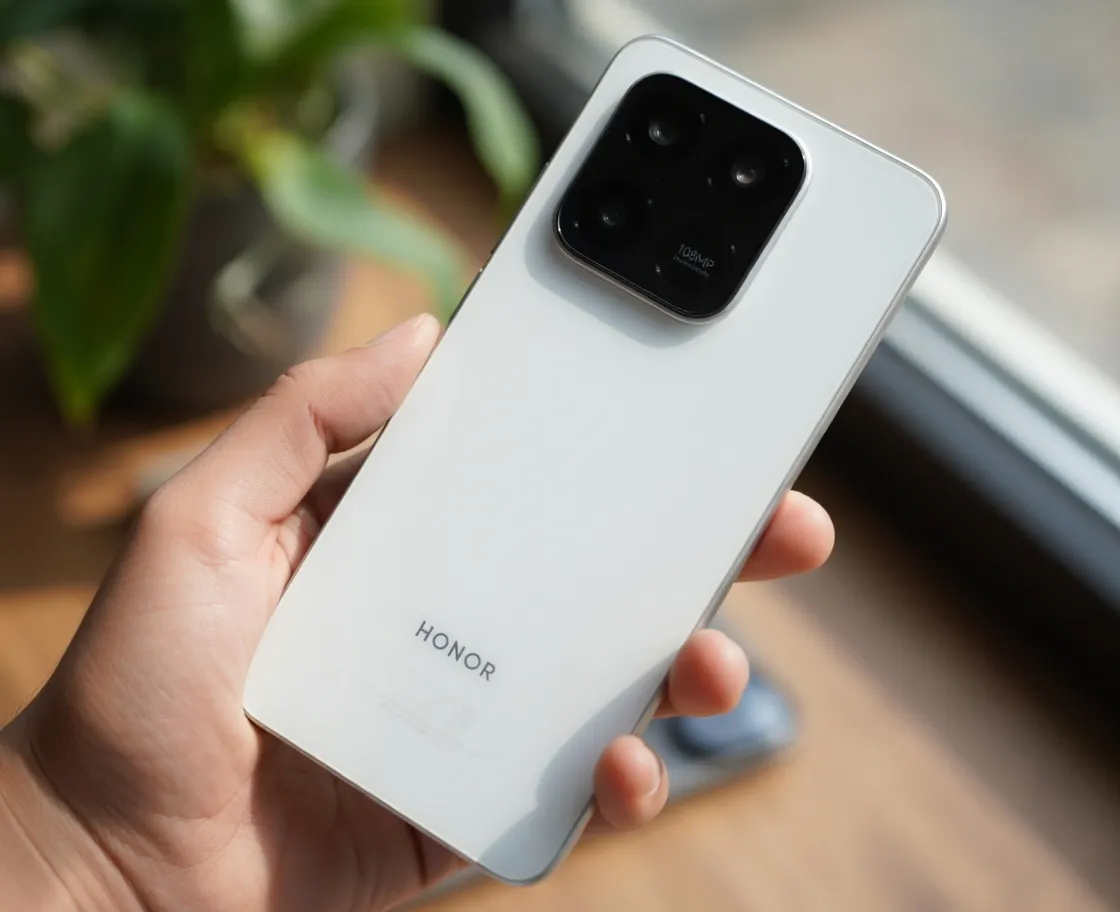

A tight holiday bonus makes you torn: pick the Honor X6C at around 2 million and “enough” for daily use, or add more for the Honor X7d in the 3–4 million range for more long‑term peace of mind? Both bring layered durability, an AI Button, and a 120Hz display. The difference: the X7d comes with IP65, a 6500mAh battery, and 8/512GB memory; the X6C offers a similar package but more economical. Here we break down the trade‑offs so your e-commerce decision is more rational.
Editorial Verdict
A synthesis of gadget reviewer opinions highlighting key strengths and trade-offs.
Best for:
- X7d : users who want ultra‑long battery life and ample storage without the hassle of deleting data
- X6C: buyers with a ~2‑million holiday bonus who need a tough phone and 120Hz without many compromises on core features
- Users who want practical AI access via a dedicated button
Not ideal for:
- Heavy gamers demanding high performance
- Seekers of AMOLED‑class screens or very fast charging
Final verdict: If budget allows, the X7d is more reassuring; if tight, the X6C remains a rational pick for daily needs.
| # | Product | Price (est.) | Key Advantages | Ideal for |
|---|---|---|---|---|
| 1 | Honor X7d | Rp3–4 million | IP65 + SGS 5-Star Drop Resistant, 6500mAh battery, 8/512GB, AI Button + AI ecosystem | Users who want long lifespan and minimal storage/battery drama |
| 2 | Honor X6C | Around Rp2 million | IP64 + SGS 5-Star Drop Resistant, 5300mAh battery, 6/256GB, AI Button, 120Hz | Budget buyers who still need durability and a smooth display |
Honor X7d Competitors
The Honor X6C plays in the crowded ~2‑million class filled by budget lines from Redmi, realme, and Infinix. The Honor X7d steps into the lower‑mid 3–4 million range, meeting options that often emphasize displays or fast charging. Amid that map, Honor pushes a “hassle‑free” narrative: drop‑safe, splash‑resistant, big battery, and AI features that are easy to access.
Honor X7d vs Honor X6C
The Honor X7d vs Honor X6C comparison boils down to three things: environmental resistance, stamina, and memory capacity. The X7d leads with IP65 (better resistance to water jets), a 6500mAh battery, and 8/512GB. The X6C lowers the price with IP64, a 5300mAh battery, and 6/256GB, yet still carries the same DNA: SGS 5‑Star Drop Resistant, an AI Button, and a 120Hz refresh rate.
Honor X7d
Key advantages:
- Serious durability. DKID highlights the SGS 5‑Star Premium Drop Resistant certification and Honor Cushioning Architecture 2.0. Add IP65, and you’ll feel more confident in rain or kitchen splashes. The matte plastic body feels tidy and resists fingerprints.
- Outlier stamina. According to DKID, the X7d’s PCMark Battery Life hits 21 hours 50 minutes. The 6500mAh double‑cell shows in real use: 30 minutes of PUBG/Mobile Legends drops about 2%, Genshin 3%. There’s a 5‑year battery lifespan claim, though time will tell.
- Truly spacious storage. 512GB internal greatly reduces the “constantly deleting” drama. Yes, AI features and the system take ~24GB at first boot, but there’s still ample room left. 8GB RAM with RAM Turbo up to 16GB virtual helps with light multitasking.
- AI within easy reach. The AI Button can one‑click shortcuts and press‑and‑hold to invoke AI features (integrated with Gemini for Circle to Search, AI Eraser, remove passer‑by, AI subtitles, transcribe, upscale, outpainting, cutout). In short, features that are usually tucked away are made easy to find.
- Extra functional. Android 15 + MagicOS 9.0 feels smooth to DKID. There’s Magic Capsule (controls in the punch‑hole area) and Magic Portal (drag‑and‑drop across apps). NFC and an IR blaster are present, and the side fingerprint reader is responsive.
Drawbacks or trade‑offs:
- TFT HD+ 120Hz display. Bright: 700 nits typical (vivid up to ~880 nits) and sRGB 99%/P3 83% per DKID’s tests. However, a TFT panel in 2026 feels like a step back for those expecting high contrast and FHD+ sharpness.
- 35W charging for 6500mAh. DKID notes it needs extra time from 0–100%, although charging every two days is realistic thanks to the stamina.
- Older chipset, “adequate” performance. Snapdragon 685 (AnTuTu ~500K) is stable (3DMark 99.4% in testing), smooth for daily use and light games. For Genshin, lowest settings average ~37 fps with dips to 23 fps—clearly not its target.
- Cameras match the price. The 108MP rear has decent dynamic range but shaky stabilization; the 8MP 1080p30 selfie tends to overexpose backgrounds. There’s 2x lossless digital zoom, AI enhancements help, but this isn’t a “showcase” camera.
- No hardware gyro. For gamers and certain video recording scenarios, this is a notable consequence.
Who is it for:
- Users prioritizing physical durability, ultra‑long battery, and large memory over a premium display or gaming performance.
Honor X6C
Key advantages:
- Price lands in the ~2‑million range. According to DKID, this is the option for a tight holiday bonus without sacrificing the fundamentals: SGS 5‑Star Drop Resistant, IP64, and a 120Hz display.
- 5300mAh battery. Still above the common 5000mAh standard, so daily rhythms are safe for chats, social media, and light content consumption.
- Realistic memory. 6GB RAM and 256GB storage provide enough room for photos, chats, and essential apps without running out quickly.
- AI Button is still here. Quick access to everyday features and tools makes AI easier to use than on many budget phones that bury it in hidden menus.
Drawbacks or trade‑offs compared to X7d:
- A step down in water protection (IP64 vs IP65). Still dust‑tight and splash‑resistant, but higher‑pressure jets are not its territory.
- Smaller battery and memory. 5300mAh/256GB is clearly less marathon‑friendly if you like to “save everything.”
- Other details not yet specified. DKID hasn’t mentioned the chipset, additional connectivity (like NFC/IR), or cameras—meaning expectations should align with the price class.
Who is it for:
- Users focused on durability, a smooth display, and light‑to‑moderate use—with budget control as the top priority.
Which One to Choose?
In the context of Honor X7d vs Honor X6C, the core decision is: pay extra for “long‑term peace of mind” (IP65, 6500mAh, 8/512GB) or save for solid basics (IP64, 5300mAh, 6/256GB). If you’re active, travel often, rarely have time to charge, and tend to store lots of videos/photos, the X7d makes sense. If your use is mostly chats, streaming, and social media, the X6C is sufficient.
Quick Notes
- In the ~2‑million tier: the X6C will face budget series from other popular brands that often emphasize display/fast charge, but may not match the durability + AI Button combo.
- In the 3–4 million range: the X7d trades a TFT panel and 35W charging for a 6500mAh battery, IP65, 512GB storage, and tidy AI features—a combo rarely complete at its class.
Who Are the X7d and X6C For?
- Choose the X7d if you need two‑day battery life, IP65, and 512GB storage for a more relaxed digital life, plus an AI ecosystem/MagicOS features that are easy to use.
- Choose the X6C if your holiday bonus is tight yet you still want a tough phone, 120Hz display, battery above 5000mAh, and “safe” memory.
TL;DR:
- X7d = long‑term peace of mind; X6C = budget‑rational.
GizmoKita Verdict:
Worth Buying. X7d for users who want minimal compromises on stamina and memory; X6C for best value buyers around 2 million.
Alternatives
- Redmi/realme/Infinix in the 2–3 million range (focus on display/fast charging)
- Other 3–4 million options that chase display/camera, but double‑check durability and battery capacity
FAQ
Is the difference between IP64 and IP65 noticeable in practice?
Yes. IP65 withstands low‑pressure water jets better. For rain and kitchen splashes, the X7d offers a wider safety margin.
Is 35W on a 6500mAh battery slow?
It takes extra time from 0–100% as noted by DKID, but charging frequency drops thanks to the 21h50m PCMark stamina.
Without a hardware gyro, what’s the impact?
Set expectations for gaming and certain video modes; some titles and modes may be less optimal.
Is the TFT HD+ display on the X7d bothersome?
For light consumption and outdoors it’s still fine (700–880 nits in DKID’s testing), but lovers of high contrast/sharpness may miss a more premium panel.
Is 512GB overkill?
If you often record video, download lots of content, and use AI features that increase data footprint, 512GB gives you breathing room without the “constant deleting.”
Written by GizmoKita — helping you buy gadgets smarter, not pricier.
Enjoy this content? Support GizmoKita so we can keep making the best gadget review summaries for you 💙
❤️ Support UsSource: DKID


