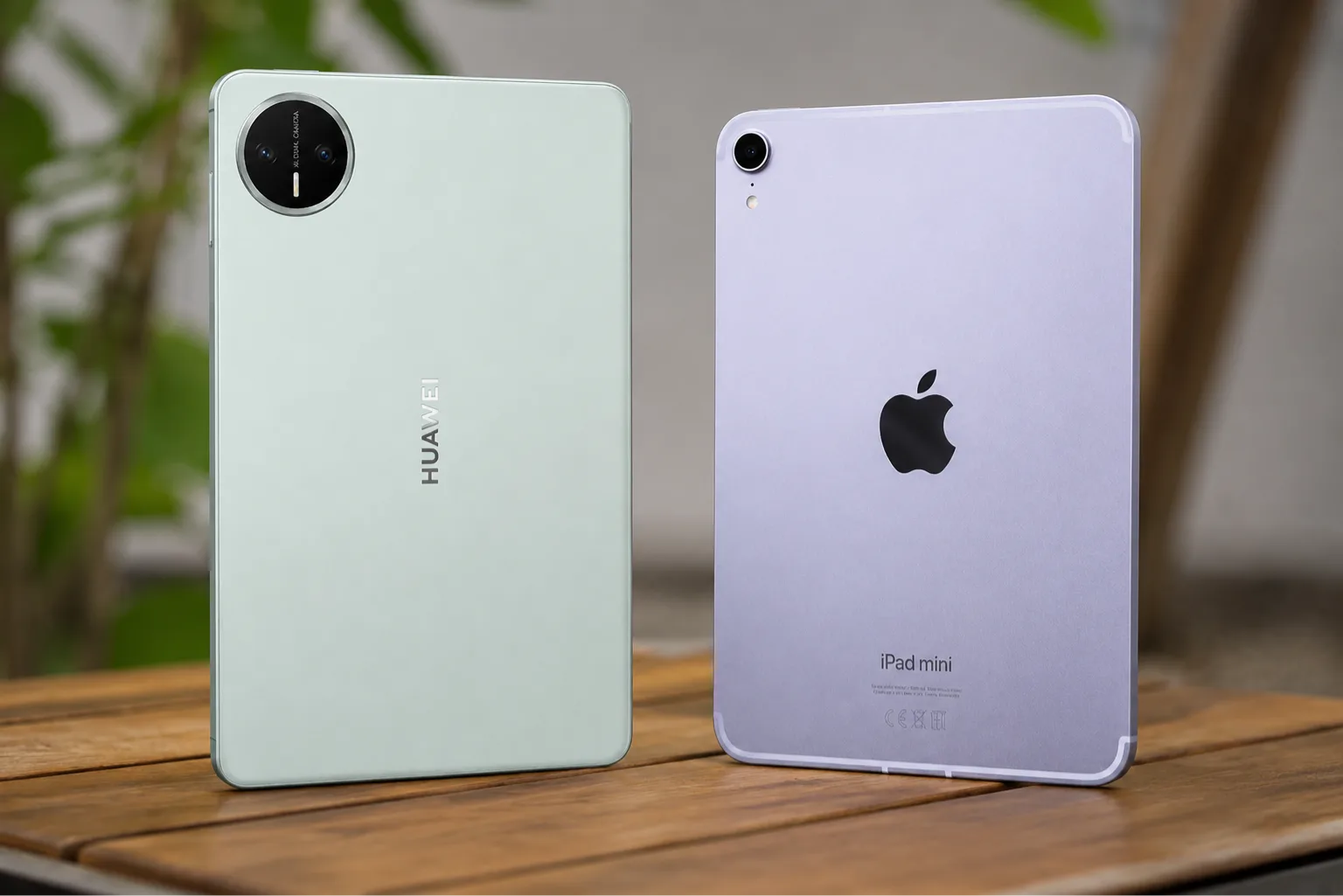

When it comes to premium mini tablets in 2026, the choices aren’t as plentiful as they used to be. Two names keep coming up: the iPad Mini 6, which has become legendary in its class, and the Huawei MatePad Mini—a newcomer that immediately made waves with the first OLED display in this segment. Both have different personalities: one relies on a mature ecosystem plus a chipset that’s still powerful, while the other brings cutting-edge display technology and an enviably light weight. So the question is simple: which one actually fits your needs?
Verdict Editorial
Sintesis opini reviewer gadget yang menyoroti kelebihan dan kompromi utama.
Huawei MatePad Mini wins in OLED display, lightweight design, and lightning-fast charging; iPad Mini 6 is stronger in chipset performance and app ecosystem.
Best for:
- Huawei MatePad Mini: you prioritize OLED display quality, maximum portability, and 66W fast charging
- iPad Mini 6: you need powerful chipset performance, proven iPadOS ecosystem, and long-term app support
Not ideal for:
- Huawei MatePad Mini: users who fully depend on native Google services or need heavy gaming performance
- iPad Mini 6: you’re eager for an OLED display with 120Hz refresh rate and faster charging
Final verdict: For the best visual experience and portability, go with Huawei MatePad Mini. For long-term performance and a stable ecosystem, iPad Mini 6 remains the safe choice.
Key Specifications: iPad Mini 6 vs Huawei MatePad Mini 2026 Comparison
| Specification | iPad Mini 6 | Huawei MatePad Mini | Notes |
|---|---|---|---|
| Display | 8.3" Liquid Retina IPS LCD, 2266x1488, 500 nits | 8.8" Flexible OLED PaperMatte, 2560x1600, 1800 nits, 120Hz | Huawei wins in panel technology and refresh rate |
| Chipset | Apple A15 Bionic (5nm) | Kirin 9010B (7nm) | iPad Mini more powerful for gaming and heavy multitasking |
| RAM/Storage | 4GB / 64GB, 256GB | 8GB, 12GB / 256GB | Huawei offers more RAM |
| Weight | 293g (Wi-Fi), 297g (Cellular) | 255g (OLED), 260g (PaperMatte Edition) | Huawei lighter by 33-42 grams |
| Thickness | 6.3mm | 5.1mm (OLED), 5.2mm (PaperMatte) | Huawei thinner by 1.1-1.2mm |
| Battery | 5078mAh, 20W charging | 6400mAh, 66W SuperCharge | Huawei wins in capacity and charging speed |
| Rear Camera | 12MP (f/1.8) | 50MP (f/1.8) + 8MP ultra-wide (f/2.2) | Huawei provides dual-camera setup |
| Front Camera | 12MP (f/2.4, 122°) | 32MP (f/2.4) | Huawei has higher resolution |
| Stylus | Apple Pencil (Gen 2), sold separately | M-Pencil Pro, bundled (promo) | Huawei often bundles stylus at launch |
| OS | iPadOS 15 (upgradable to iPadOS 18) | HarmonyOS 4.3.0 | Different ecosystems, iPadOS more mature for productivity |
| Price (2026) | ~$320-$500 (second market) | ~RM2,199 (~$500), €579 (~$630) | Prices vary by region, iPad Mini 6 cheaper in second market |
Design and Portability
Weight and Dimensions
The Huawei MatePad Mini weighs just 255 grams for the standard OLED variant and 260 grams for the PaperMatte Edition—33-38 grams lighter than the iPad Mini 6, which hits 293 grams (Wi-Fi) or 297 grams (Cellular). This difference sounds small, but trust me, you’ll really feel it when holding the tablet one-handed for extended periods—like when reading e-books or watching series while lying down.
In terms of thickness, Huawei also wins: just 5.1mm (OLED) versus 6.3mm for the iPad Mini 6. This slimmer profile makes the MatePad Mini incredibly easy to slip into a small bag or even a thick jacket pocket.
Materials and Build Quality
The iPad Mini 6 uses a combination of glass front, aluminum back, and aluminum frame with color options in Space Gray, Pink, Purple, and Starlight. Its design is minimalist with bezels that—honestly—are quite thick by 2026 standards.
The Huawei MatePad Mini comes with a magnesium alloy frame and 3D vegan fiber back panel in Spruce Green, Graphite Black, Snow White, and Universe Red. Its screen-to-body ratio reaches 92%, giving it a much more modern look with super-thin bezels—though this also has its risks: the screen is more prone to accidental touches when held.
Accessories in the Box
During launch promo periods, the Huawei MatePad Mini is often bundled with the M-Pencil Pro, folio cover, transparent hardcase, 66W USB-C charger, and microfiber cloth. Meanwhile, the iPad Mini 6 only includes a 1-meter USB-C cable and 20W charger; the Apple Pencil (Gen 2) is sold separately for $129.
Display: 120Hz OLED vs Liquid Retina LCD
Panel Technology and Visual Quality
This is the biggest difference between the two. The Huawei MatePad Mini uses a Flexible OLED 8.8-inch display with 2560x1600 pixel resolution (343 ppi), 120Hz refresh rate, and 1800 nits peak brightness. The OLED panel delivers 2,000,000:1 contrast, much more vibrant colors with support for 1.07 billion colors and P3 wide color gamut.
The iPad Mini 6 sticks with a Liquid Retina IPS LCD 8.3-inch display with 2266x1488 pixel resolution (326 ppi), standard 60Hz refresh rate, and maximum brightness of only 500 nits. While color accuracy is good and viewing angles are wide, LCD simply can’t match the deep blacks and dynamic range offered by OLED.
PaperMatte Display: Huawei’s Unique Advantage
The PaperMatte Edition of the MatePad Mini features an anti-reflective coating that gives the screen a paper-like texture. This technology reduces light reflection almost completely, making the screen comfortable to read even under direct sunlight. Writing with the M-Pencil Pro on PaperMatte feels more natural—like writing on real paper.
But there’s a trade-off: the PaperMatte screen attracts fingerprints more easily and requires regular cleaning with a microfiber cloth.
Refresh Rate and Responsiveness
The 120Hz refresh rate on the Huawei MatePad Mini makes scrolling much smoother and more responsive, especially when browsing the web or reading long documents. The iPad Mini 6 with 60Hz still feels fluid for general use, but the difference is immediately noticeable when you compare them side-by-side.
Performance: Apple A15 Bionic vs Kirin 9010B
Chipset Power
The Apple A15 Bionic (5nm) in the iPad Mini 6 remains one of the most powerful chipsets in its class. With a 6-core CPU (2 performance + 4 efficiency cores), 5-core GPU, and 16-core Neural Engine, this tablet can handle heavy gaming, 4K video editing, and intensive multitasking without lag.
The Huawei MatePad Mini uses the Kirin 9010B (7nm) with a hexa-core CPU. While not as powerful as the A15 Bionic in raw benchmarks, the combination with 8GB/12GB RAM keeps HarmonyOS 4.3 smooth for daily productivity, streaming, and light-to-medium gaming.
RAM and Multitasking
Huawei offers 8GB or 12GB RAM options, giving you more headroom for multitasking and running multiple apps simultaneously. The iPad Mini 6 only has 4GB RAM, but iPadOS optimization makes memory management efficient.
App Ecosystem
iPadOS has a significant advantage in the tablet app ecosystem. Most productivity apps (Adobe Suite, Procreate, LumaFusion) and AAA games are optimized for iPad. HarmonyOS 4.3 relies on Huawei AppGallery and third-party app support through APK or GBox/GSpace for Google Play Store access—the solution works, but it’s not as seamless as native.
Stylus: M-Pencil Pro vs Apple Pencil (Gen 2)
Stylus Specifications and Features
Huawei M-Pencil Pro (Gen 3):
- 10,000+ pressure levels
- ~15ms latency with NearLink technology
- Enhanced tilt support
- Magnetic attachment for pairing and charging
- Double-tap shortcut to switch pen/eraser (only in Huawei Notes)
- Weight: 14.8g
- Haptic feedback when writing on PaperMatte Display
Apple Pencil (Gen 2):
- 4,096 pressure levels (not officially specified)
- ~20ms latency
- Tilt support
- Magnetic attachment for pairing and charging
- Double-tap shortcut to switch tools (works in many apps)
- Weight: 20g
Drawing and Writing Experience
The M-Pencil Pro with PaperMatte Display provides the writing sensation closest to physical paper. Palm rejection works perfectly, and haptic feedback adds realism. However, professional drawing app support is still limited compared to iPad.
The Apple Pencil (Gen 2) remains the industry standard for digital art. Wide support in apps like Procreate, Affinity Designer, and Concepts, plus low latency and high accuracy, make this the top choice for professional content creators.
Battery and Charging
The Huawei MatePad Mini wins decisively with a 6400mAh battery and 66W SuperCharge—it can charge 60% in 30 minutes. The iPad Mini 6 has a 5078mAh battery with 20W charging that’s much slower.
For real-world use, both tablets can last 8-10 hours for browsing, streaming, or light productivity. But Huawei’s charging speed gives much more flexibility for mobile users.
Camera: Dual Setup vs Single Lens
The Huawei MatePad Mini features dual rear cameras: 50MP main (f/1.8) + 8MP ultra-wide (f/2.2) with 4K recording support and OIS. The 32MP front camera (f/2.4) is great for high-quality video calls.
The iPad Mini 6 only has a single 12MP rear camera (f/1.8) and 12MP front camera (f/2.4, 122° ultra-wide) with Center Stage for automatic tracking during video calls.
For tablets, camera quality isn’t a top priority—but Huawei provides more flexible options if you occasionally need photography or videography.
Pricing and Value-for-Money
Official 2026 Pricing
- iPad Mini 6: No longer officially sold new; second market prices range from $320-$500 depending on condition and storage.
- Huawei MatePad Mini:
- Malaysia: RM2,199 (~$500) with accessory bundle promo
- Europe: €579 (~$630)
- China: 3,999 yuan (~$550)
Value Analysis
If buying new, the Huawei MatePad Mini offers better value with bundled M-Pencil Pro, folio cover, and 66W charger. The 120Hz OLED display, light weight, and fast charging are significant added values.
The iPad Mini 6 in the second market can be a budget-friendly choice if you prioritize chipset performance and the iPadOS ecosystem, especially if you already own other Apple devices.
Software and Ecosystem: iPadOS vs HarmonyOS
iPadOS: Mature and Integrated
iPadOS 15 (upgradable to iPadOS 18) offers:
- Advanced multitasking (Split View, Slide Over, Stage Manager)
- Wide support for optimized tablet apps
- Seamless integration with iPhone, Mac, Apple Watch (Continuity, Sidecar, AirDrop)
- Long-term software updates (iPad Mini 6 still getting updates in 2026)
HarmonyOS 4.3: Flexible but Limited
HarmonyOS 4.3 offers:
- Modern UI with smooth animations
- Practical multitasking tools for casual productivity
- Integration with Huawei ecosystem (smartphone, wearable, laptop)
- Complete apps available via AppGallery, GBox, or GSpace for Google Play Store access
- Black-and-white e-book mode for reading comfort
Limitations: no native access to Google services (Gmail, Google Drive, Google Meet), and some banking/streaming apps may not be available or require workarounds.
Who Should Buy Each Tablet?
Choose Huawei MatePad Mini If:
- You prioritize OLED display quality with 120Hz refresh rate for media consumption
- Maximum portability matters (255-260g weight, 5.1-5.2mm thickness)
- You frequently draw/write and want the natural PaperMatte experience
- 66W fast charging is essential for high mobility
- You don’t fully depend on the Google ecosystem or iOS-exclusive apps
- Your budget allows for a new tablet with complete accessory bundle
Choose iPad Mini 6 If:
- You need powerful chipset performance for gaming, video editing, or heavy multitasking
- The iPadOS ecosystem and professional app support (Procreate, Adobe, LumaFusion) are important
- You already own other Apple devices and want seamless integration
- Long-term software updates are a priority
- You’re looking for second market options at more affordable prices ($320-$500)
- A 60Hz LCD display is sufficient for daily needs
TL;DR: Comparison Summary
- Display: Huawei MatePad Mini wins decisively with 120Hz OLED, 1800 nits brightness, and PaperMatte Display.
- Performance: iPad Mini 6 is more powerful with A15 Bionic for gaming and heavy apps.
- Portability: Huawei is lighter (255-260g vs 293-297g) and thinner (5.1-5.2mm vs 6.3mm).
- Battery: Huawei wins with 6400mAh and 66W charging vs 5078mAh and 20W iPad.
- Stylus: M-Pencil Pro offers 10,000+ pressure levels and PaperMatte experience; Apple Pencil (Gen 2) is more mature in app support.
- Ecosystem: iPadOS is more stable and extensive; HarmonyOS is flexible but limited in native Google access.
- Price: Huawei ~$500-$630 (new with bundle); iPad Mini 6 ~$320-$500 (second market).
Verdict: Worth Buying or Not?
Huawei MatePad Mini: Worth buying if you prioritize the best visual experience (120Hz OLED), maximum portability, and fast charging. Great for media consumption, reading, casual drawing, and light productivity. HarmonyOS ecosystem limitations can be overcome with workarounds, but not ideal for users who fully depend on Google services or iOS-exclusive apps.
iPad Mini 6: Still worth buying in 2026 if you need powerful chipset performance, a mature app ecosystem, and seamless integration with other Apple devices. While the 60Hz LCD display feels dated compared to 120Hz OLED, software optimization and long-term support make this a safe investment for professional productivity and creativity.
Alternative Premium Mini Tablets 2026
If neither option above fits, consider:
- Samsung Galaxy Tab S9 FE (8.7") – Android alternative with full Google ecosystem, S Pen included, and competitive pricing.
- Xiaomi Pad 6S Pro Mini – Android option with Snapdragon 8 Gen 2, 120Hz LCD display, and more affordable pricing.
- iPad Mini 7 (if released in 2026) – If Apple releases a new generation with OLED display and A17/A18 chipset, it could be the best choice combining both strengths.
FAQ: Common Questions
1. Can Huawei MatePad Mini use Google?
Not natively. But you can install Google Play Store through GBox or GSpace available in Huawei AppGallery. This solution works for most Google apps (Gmail, YouTube, Google Drive), but some banking or streaming apps may not be compatible.
2. Is iPad Mini 6 still worth it in 2026?
Yes, especially if bought in the second market at $320-$500. The A15 Bionic chipset is still powerful for gaming and productivity, and iPadOS 18 still supports this device with regular updates. However, the 60Hz LCD display feels dated compared to 120Hz OLED competitors.
3. How much does iPad Mini 6 weigh with full accessories?
iPad Mini 6 (293g) + Apple Pencil Gen 2 (20g) + Smart Folio (~100g) = approximately 413g. Huawei MatePad Mini with M-Pencil Pro and folio cover reaches ~453g according to sources, but the base tablet weight is still lighter.
4. Which is better for drawing: PaperMatte or Apple Pencil?
PaperMatte Display with M-Pencil Pro provides the most natural writing sensation like paper, great for note-taking and casual sketching. Apple Pencil (Gen 2) is superior for professional digital art due to wide app support (Procreate, Affinity Designer) and mature ecosystem.
5. Is OLED display better than LCD for mini tablets?
Yes, for media consumption and outdoor use. OLED offers higher contrast, more vibrant colors, deep blacks, and higher brightness (1800 nits vs 500 nits). However, OLED risks burn-in when displaying static elements for extended periods—though latest technology has minimized this risk.